How to Teach Phonics to Young Learners Effectively?
Teaching a child to read is one of the most meaningful responsibilities in education. When educators understand How to Teach Phonics to Young Learners, they equip children with decoding skills that support lifelong academic success.
Phonics goes beyond memorizing letters. It builds structured connections between sounds, symbols, pronunciation, vocabulary, and comprehension. With systematic guidance and engaging practice, children develop both accuracy and confidence.
This guide explains who started systematic phonics, why it was developed, when it became essential, how it works, and why choosing phonics training from APTTI strengthens your teaching career.
Understanding How to Teach Phonics to Young Learners in Early Childhood Education
Phonics instruction helps children recognize the relationship between spoken sounds and written letters. Young learners are still developing listening skills, speech clarity, and memory, so teaching must be simple, explicit, and repetitive.
Successful application of How to Teach Phonics to Young Learners involves:
- Modelling the sound
- Guided repetition
- Word-level practice
- Independent reading application
When instruction is organized and predictable, learners retain knowledge longer and progress more confidently.
Who Started Systematic Phonics?
Systematic phonics developed through decades of literacy research rather than a single founder.
In the 1960s, reading researcher Jeanne Chall compared phonics-based instruction with whole-language approaches. Her research demonstrated that structured sound-letter teaching leads to stronger long-term reading accuracy.
By the early 2000s, national literacy panels confirmed that systematic phonics improves reading fluency and decoding ability. Since then, phonics has become a foundation of early literacy programs worldwide.
Understanding the history behind Phonics Teaching Strategies for Kids helps educators appreciate why structure and sequence matter.
When Did Phonics Become Widely Adopted?
Although phonics has existed since the 19th century, it gained global recognition during the late 20th and early 21st centuries.
1960s–1970s: Research-Based Comparisons
Educational studies began comparing phonics with whole-language methods.
2000: Literacy Panel Endorsement
Major literacy research confirmed systematic phonics as an essential reading strategy.
2006 Onward: National Implementation
Several countries introduced structured phonics screening and curriculum guidelines.
Today, How to Teach Phonics to Young Learners is a central focus in early childhood education systems.

Why Was Systematic Phonics Developed?
Systematic phonics was created to ensure reading equity.
Many children struggled when asked to memorize whole words without understanding decoding patterns. Structured phonics reduced confusion and gave learners reliable tools to read independently.
The purpose behind How to Teach Phonics to Young Learners is to:
- Provide step-by-step reading instruction
- Reduce guessing strategies
- Support struggling readers
- Create measurable academic progress
- Ensure every child develops decoding confidence
How How to Teach Phonics to Young Learners Works in Structured Progression
Children learn best when skills build logically. Random instruction creates learning gaps, while planned sequencing strengthens mastery.
Step-by-Step Phonics Development
- Teach individual letter sounds
- Practice identifying sounds in words
- Introduce blending (c-a-t → cat)
- Develop segmenting for spelling
- Add digraphs and blends
- Build sight vocabulary
- Move to sentence reading
This progression defines effective application of Phonics Activities for Young Children and ensures steady literacy growth.
Phonics Teaching Strategies for Kids
Retention increases when instruction is multisensory. Young learners respond strongly to rhythm, visuals, repetition, and movement.
Effective strategies include:
- Whole-class modelling
- Pair reading
- Small-group guided practice
- Sound games and chants
- Frequent revision sessions
Applying varied strategies enhances the impact of How to Teach Phonics to Young Learners in diverse classrooms.
Phonics Activities for Young Children
Play-based learning keeps attention high and encourages participation.
Popular activities include:
- Sound matching games
- Letter hunts
- Word-building with tiles
- Action-based sound chants
- Partner reading
- Quick spelling challenges
These activities make How to Teach Phonics to Young Learners engaging while reinforcing repetition.
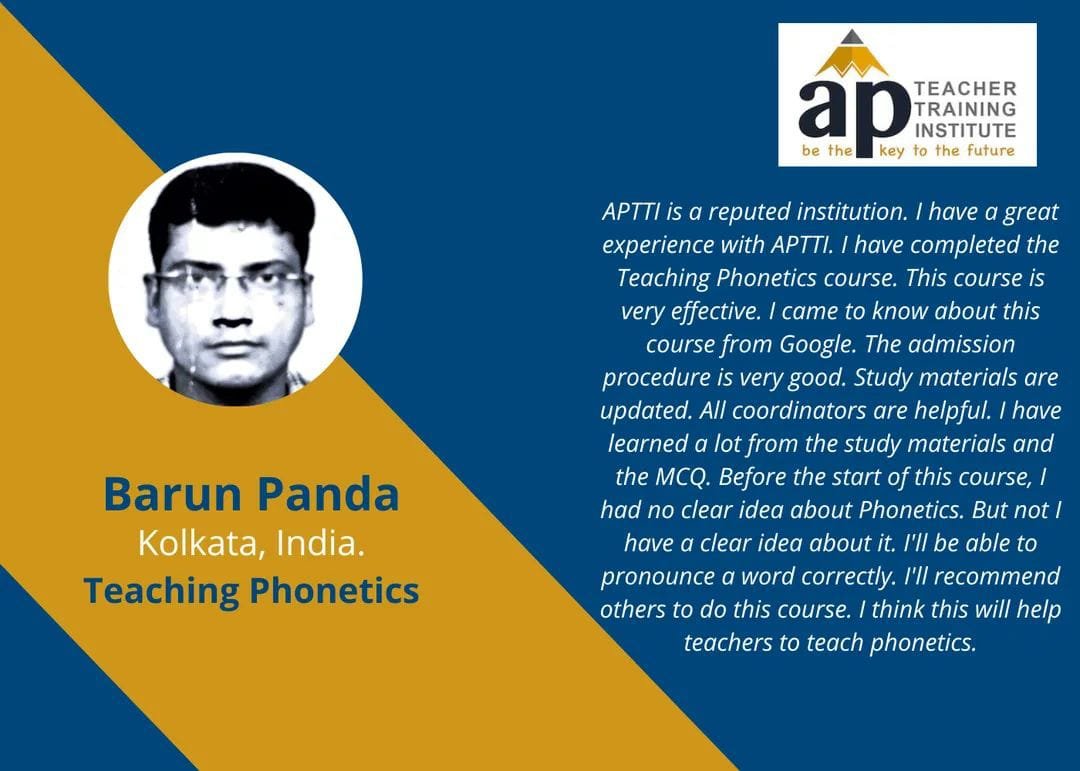
Why Choose Phonics Training from APTTI?
Professional preparation strengthens classroom confidence and career prospects.
Choosing a structured certification program in How to Teach Phonics to Young Learners through APTTI provides:
Structured Curriculum
Comprehensive modules covering theory, lesson sequencing, and assessment.
Practical Teaching Techniques
Real classroom strategies for blending, segmentation, and error correction.
Flexible Study Options
Online learning formats that allow professionals to progress at their own pace.
International Recognition
Certification improves employability in schools, preschools, and international institutions.
Start Your Journey in How to Teach Phonics to Young Learners Today:-

How Effective Is the English Language as a Primary Mode of Communication

Impact of Phonetics in English Language Teaching
About Author

APTTI
APTTI offers a wide range of teachers training courses, keeping in mind the need of all teachers. We help teachers qualify for an international teaching career and get acquainted with latest teaching methodologies and strategies to teach worldwide. https://onlineteacherstraining.com/